
When plant and animal residues decompose, part of that organic matter is transformed into complex, stable compounds called humic substances. They give fertile soil its dark colour and account for much of its ability to hold water and nutrients.
Commercial humic products are commonly extracted from natural deposits such as leonardite, a naturally oxidised form of lignite.
Humic acid and fulvic acid: what is the difference?
Humic substances are usually divided by how they dissolve in water:
- Humic acid consists of larger molecules that dissolve in alkaline conditions. It works mainly in the soil, improving structure, water holding and the soil’s capacity to hold nutrients.
- Fulvic acid consists of smaller molecules that stay soluble across the pH range. It is more mobile, binds (chelates) micronutrients such as iron and zinc, and helps carry them to the roots.
What they do in the soil
- Better soil structure: humic acid helps bind soil particles into crumbs, improving aeration and root penetration in heavy soils and water retention in light, sandy soils.
- More nutrient-holding capacity: humic substances raise the soil’s cation exchange capacity (CEC), so nutrients such as potassium, calcium and magnesium stay in the root zone instead of washing away.
- Lower fertilizer losses: by holding nutrients and reducing phosphorus fixation, humic substances help applied fertilizer stay available to the crop for longer.
- A better home for microbes: the organic carbon in humic products supports beneficial soil microorganisms.
What they do for the plant
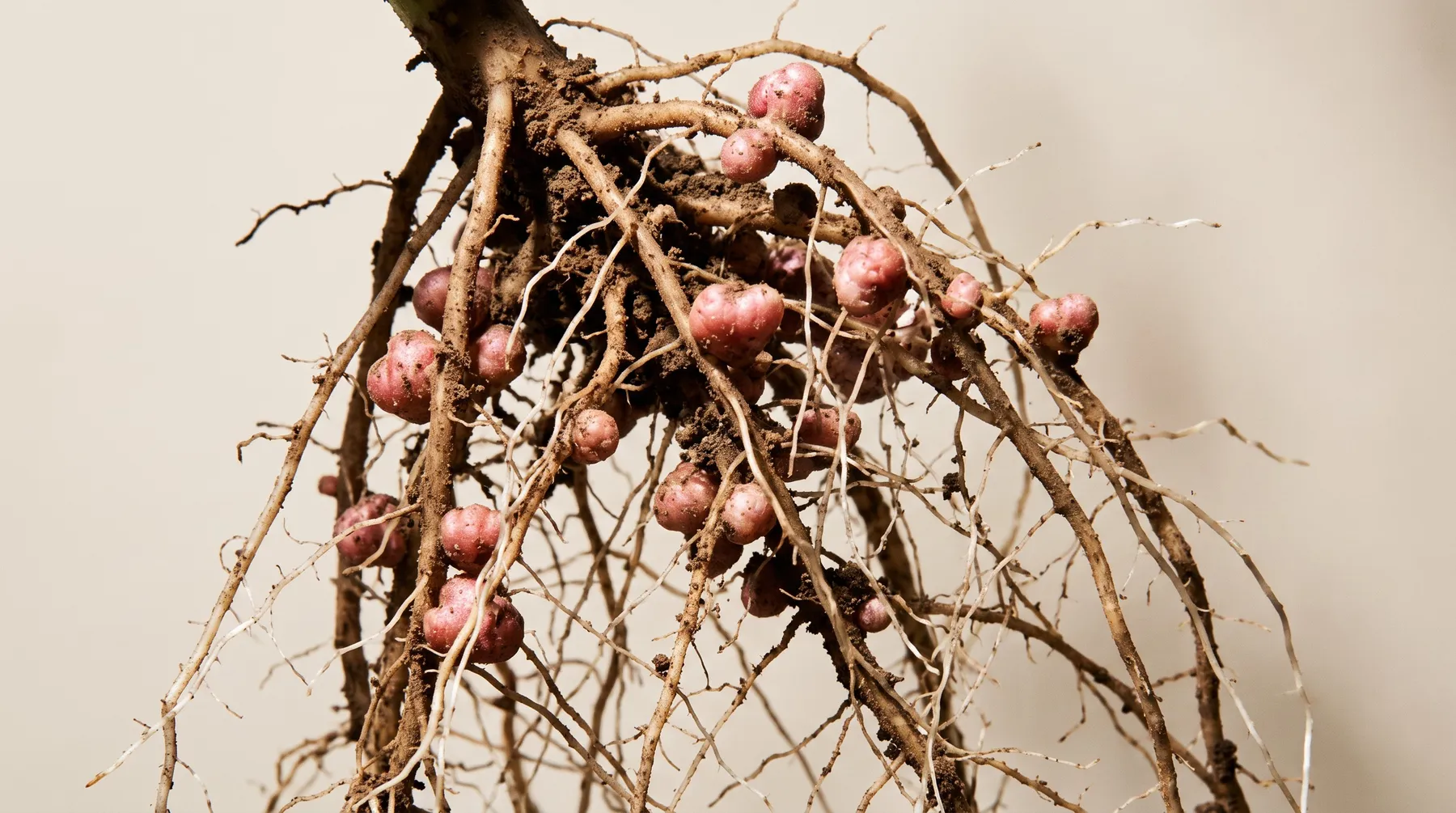
Humic and fulvic acids are widely associated with stronger root growth, and more roots means more soil explored for water and nutrients. Better uptake and a bigger root system also help crops cope with stresses such as short dry spells.
Humic acid plus beneficial bacteria
Humic substances and beneficial bacteria work well together: the organic carbon supports microbial activity, while bacteria such as Bacillus subtilis colonise the root zone. Nature Stim combines humic acid (15% w/v), fulvic acid (6% w/v), potassium and Bacillus subtilis in a single liquid formulation.
How to use humic products
- Through drip irrigation, for even delivery to the root zone.
- As a soil application mixed with FYM or compost.
- As a seed treatment or seedling root dip at the start of the crop.
Follow label rates (more is not always better) and use humic products alongside balanced nutrition based on a soil test.